
Beginning again, without starting over
What a fresh start can – and can’t – do
How do you do New Year?
For many of us, the start of a New Year brings the sense of renewal, of reinvigoration and a fresh start. On the one hand its significance is arbitrary, turning over to a new number as we count the years going by.
Yet it can also feel oddly loaded. For many there’s a pressure that we should use the moment well, that January represents an opportunity we’d be foolish to waste. That tension – between possibility and pressure – is where many of us start the year.
I don’t want to write about doing New Year “right”. Mostly because there’s no such thing. What I’d like to reflect on instead is what this moment offers, and how to avoid some very common pitfalls. Let’s explore.

Why fresh starts have such a pull
There’s a reason the turn of the year feels different. Psychologically, fresh starts matter. They create a natural pause, a line in the sand that helps us step back and ask a few reflective questions about how things are going, and what we might want to change or improve.
For leaders especially, this can be a useful moment. Planning cycles reset and diaries feel marginally less full. There’s a collective sense of just a little bit of space “before we get properly going again…”.
Used well, a fresh start can create energy and clarity. But so often it all goes wrong.
The thin line between momentum and overload
The trouble isn’t the fresh start itself, it’s what we do with it.
At one end of the spectrum, there’s the temptation to go too big, too fast. Sweeping goals and grand declarations mean January can become intense, demanding and frankly intimidating. Short-term effort spikes, but consistency rarely follows. The change doesn’t bed in because it was far too ambitious to live in the reality of everyday life.
At the other end sits cynicism: a dismissal of the whole thing. “It’s just another day”.
Sometimes that’s wisdom speaking, but sometimes it’s avoidance, or an unwillingness to get out of our familiar and comfortable – albeit suboptimal – groove. And if we ignore the moment entirely, we miss a genuine opportunity to pause and recalibrate.
Neither extreme is particularly helpful.
Somewhere in the middle – Goldilocks style: not too hot, not too cold – is a more workable option. A way to acknowledge the fresh start without turning it into a test of your stamina or your competence.
Evolution beats revolution (most of the time)
This is where a more balanced stance comes in.
January doesn’t have to be about transformation, it’s better suited to adjustment. To small, deliberate improvements that build on who you already are, rather than attempts to reinvent yourself or your leadership.
You might think of it as evolution rather than revolution – a favourite quote of mine relating to the way change happens in a centuries old rowing institution. Sustainable change comes from thoughtful, manageable, repeated actions, not dramatic resets.
This is where the thinking from Do Sweat the Small Stuff comes into play. Effective shifts in leadership presence and impact are usually the result of tiny moments handled differently, again and again. Tone, timing, attention, follow-through. These are the places where real change takes root, and the consistency is what allows others to trust and believe the change will stick.
How this lands in the day-to-day of leadership
When you approach the year with measured intention, rather than trying to change everything at once, something subtle but important happens.
You signal to your team that development doesn’t require drama. That growth is normal, human, and ongoing. That it’s acceptable to work on things without first labelling yourself – or anyone else – as deficient.
January is already a pressured month for many teams. A leader who models steadiness rather than frenzy lowers the emotional temperature. That, in itself, is a meaningful intervention.
Rather than setting out to change everything, consider choosing one or two small shifts that genuinely matter. Not because you’re doing them “wrong”, but because they would make your working life – and the lives of those around you – a little better.
Here are two ways you could approach that:
First, try a micro-review of last year; not a forensic post-mortem, just a moment of noticing.
Which small behaviours or habits had a disproportionate positive impact?
Where did your everyday interactions repeatedly drain energy or connection?
What’s one thing you could do slightly more of, and one thing slightly less?
Second, look at your goals through a self-respect lens before committing to anything new.
If you assumed you didn’t need fixing, what would you still choose to work on?
Which ambitions feel grounded and sustainable, rather than performative?
What might one month of consistent attention achieve, without adding pressure?
Neither of these requires a reinvention. They ask only for honesty and restraint.
Start gently, but do start
Perhaps the most useful way to hold January is this: you don’t need to be new – and you also don’t need to stay exactly the same.
A fresh start can be an invitation, not a demand. A chance to choose one small, grounded shift that shapes how you show up in the moments that actually matter.
Beginning again, without starting over.
Let me know how you do New Year, and how you might do it differently now, by leaving a comment or hitting reply. I’d love to hear from you.
Restack
I enjoyed this reflection on the year from Steve Magness, synthesising 25 lessons on peak performance. Pithy, and very much on point.
Meme of the week
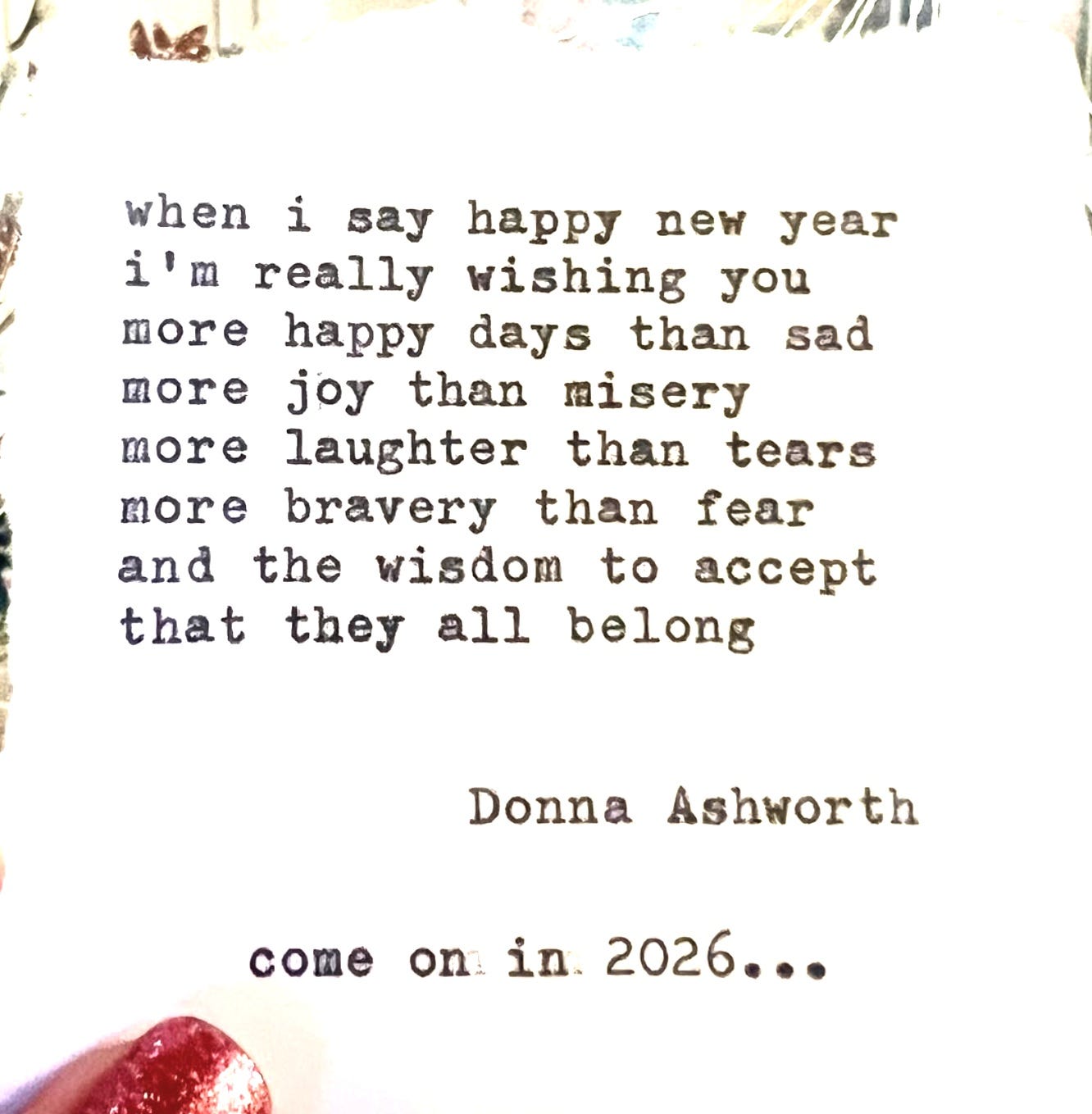
Some beautiful words to kick off the year from Donna Ashworth.
And for a little bonus extra, I enjoyed this Philosophy Minis video from Jonny Thomson introducing the Buddhist idea of Dāna – giving without expectation of anything in return – as a practice to take into 2026.
Want to read more from me? Read my book, Do Sweat the Small Stuff, or read my full Substack archive here. Follow me on Linkedin for more regular content.
Please use this button to share this with someone who you think would enjoy it!
Get in touch by email if you’d like to explore me speaking to your organisation or at your event, or are interested in working with me as a coach.