
Lost in delivery
Why your message may not arrive the way you sent it

A client of mine used to end every team meeting the same way. A quick glance around as he began gathering his papers; or if he was on a call, it was the unmistakable energy of someone whose finger was already hovering over “end call” button. Same words, every time: “Any questions?”
Nobody ever said anything.
It wasn’t that there was nothing to ask. There were concerns about the approach or the timeline, areas of genuine confusion, questions that frankly needed asking before the meeting ended and everyone dispersed. But something about the way he asked had already communicated a message – the meeting was over. Asking felt unwelcome and unwanted.
He had no idea: he thought he was inviting input. His words said “my door is open”, yet his tone had already closed it.
When your words and your tone don’t align, your team doesn’t agonise over which to believe. They trust the tone, and that has a cost. Let’s explore.
The message under the message
When we speak, many of us think about the words we choose (at least to some degree…), particularly in conversations we perceive as important. We consider how to frame something, what to include, how to be clear. However, we pay far less attention to our tone – and that’s where the message can get lost.
Tone tends to run on autopilot, a direct reflection of whatever is happening inside us in that moment. This is the System 1 dimension of communication: automatic, instinctive, largely beyond our conscious control. The problem is you can bring all the considered, deliberate System 2 thinking you like to what you say, but if your tone is running on a different track, two messages go out simultaneously. And the one that lands may not be the one you intended.
The consequence is a specific kind of failure: despite applying thought and intention to what you say you can still lose the message entirely, because your tone has sent a different one.
There are examples everywhere once you start looking:
“That’s interesting” delivered flatly.
“What do you think?” asked by someone who has clearly already decided.
“Good work” acknowledged with the energy of someone saying what they know they’re supposed to say, rather than actually meaning it.
The words are technically fine, but the tone tells a different story.
Why do they never say anything?
When tone contradicts invitation, people learn not to take the invitation seriously; they stop testing it, and eventually they stop trying altogether. This happens gradually rather than all at once, and it’s rarely a conscious decision. It’s simply what happens when the signal and the message are in conflict for long enough
The consequences run deep. Psychological safety – the foundation of any team that challenges, questions and brings problems to the surface – depends less on what leaders say they want than on the signals they actually give. Tone is one of those primary signals, telling people moment to moment whether the space is genuinely open or just nominally so, and people respond to how they feel, not what they’ve been told.
One of the most common frustrations leaders bring to me is a version of the same question:
Why don’t people speak up?
Why, when I specifically invite challenge or input, does the room go quiet?
The answer, more often than is comfortable, lies with the person asking the question, and the unintended signal they’re giving off. Yet it is far easier to blame the other person. To say: “they should be more proactive” or “I gave them the chance to ask but they didn’t take it”.
One particular challenge with tone is that it often stems from context you have but the people around you don’t. You know you’re speaking quickly because you’re running late to your next meeting; you know (or at least have peripheral awareness) that the tension in your voice is the residue of an infuriating email you read five minutes ago, nothing to do with the person now in front of you. That context makes the tone feel explicable, even neutral, from the inside. But the people on the receiving end don’t have that context – all they have is what they hear, and what they hear shapes what they do next.
When intention matches impact
Managing your tone to ensure it matches your message starts with a few specific things.
Pause before you speak.
A genuine pause – before asking for input, before closing a meeting, before inviting a challenge – resets your internal state and signals to the room that you mean it. The pause itself communicates that there is space here, before a word has been said.
Look at the words, too.
“Any questions?” is technically an invitation, but it doesn’t presuppose there are any. “What questions do you have?” does – a small linguistic shift that carries a meaningfully different signal, an expectation of engagement rather than a polite opportunity to exit.
Greater intention in your choice of words or the framing of your question not only helps clarify the message, but also helps remind you to notice your tone as you speak. It’s much harder to ask “What questions do you have?” in an abrupt tone!
Notice your state before you open your mouth.
If you’re already mentally in the next meeting, your tone will be there too; the frustration from a difficult conversation earlier has a way of bleeding into the one you’re in now. Noticing that, even briefly, gives you the chance to filter it before it lands somewhere it doesn’t belong.
Ask for specific feedback.
Not “how do I come across?” but something more targeted: when there’s a gap between what I say and how I say it, what do you notice? Give someone you trust the permission to be honest, then take it seriously when they are.
Returning to the client example I started with: he made exactly two changes, and both mattered. The first was what he said. Asking: “What questions do you have for me?” may have been a small rewrite, but it shifted the entire frame from invitation to expectation.
The second was harder, and as it turned out, more important. Before asking, he paused. He took a breath, consciously slowed his pace, made proper eye contact, and rather than already being halfway out of the room (or off the call) he stayed present for a moment longer. For the first time, what he said and how he said it were sending the same message.
The questions came. Not all at once, and not immediately – trust doesn’t rebuild in a week. But they came. And with them came the things he actually needed to know.
Two seconds that changes everything
All of this comes down to a window of about two seconds, the moment just before you open your mouth. That’s where the real message is set: not in the words you’ve prepared, but in your pace, your breath, your presence.
Your team isn’t just listening to the words you say, they’re reading all of you.
This week, pick one phrase you use habitually – ending a meeting, asking for input, giving feedback – and ask yourself honestly whether your tone is backing it up. The shift is smaller than you think. It starts with a pause.
Hit reply or leave a comment: what’s your version of “any questions?” – the phrase you say that you suspect your team might not be taking at face value?
One additional note: I’ve written before about the pressure tone comes under and how to recover when it misfires – you can find that piece here.
Restack
A short, thought-provoking read on why our focus can end up on what feels controllable rather than what really matters.

Thought of the week
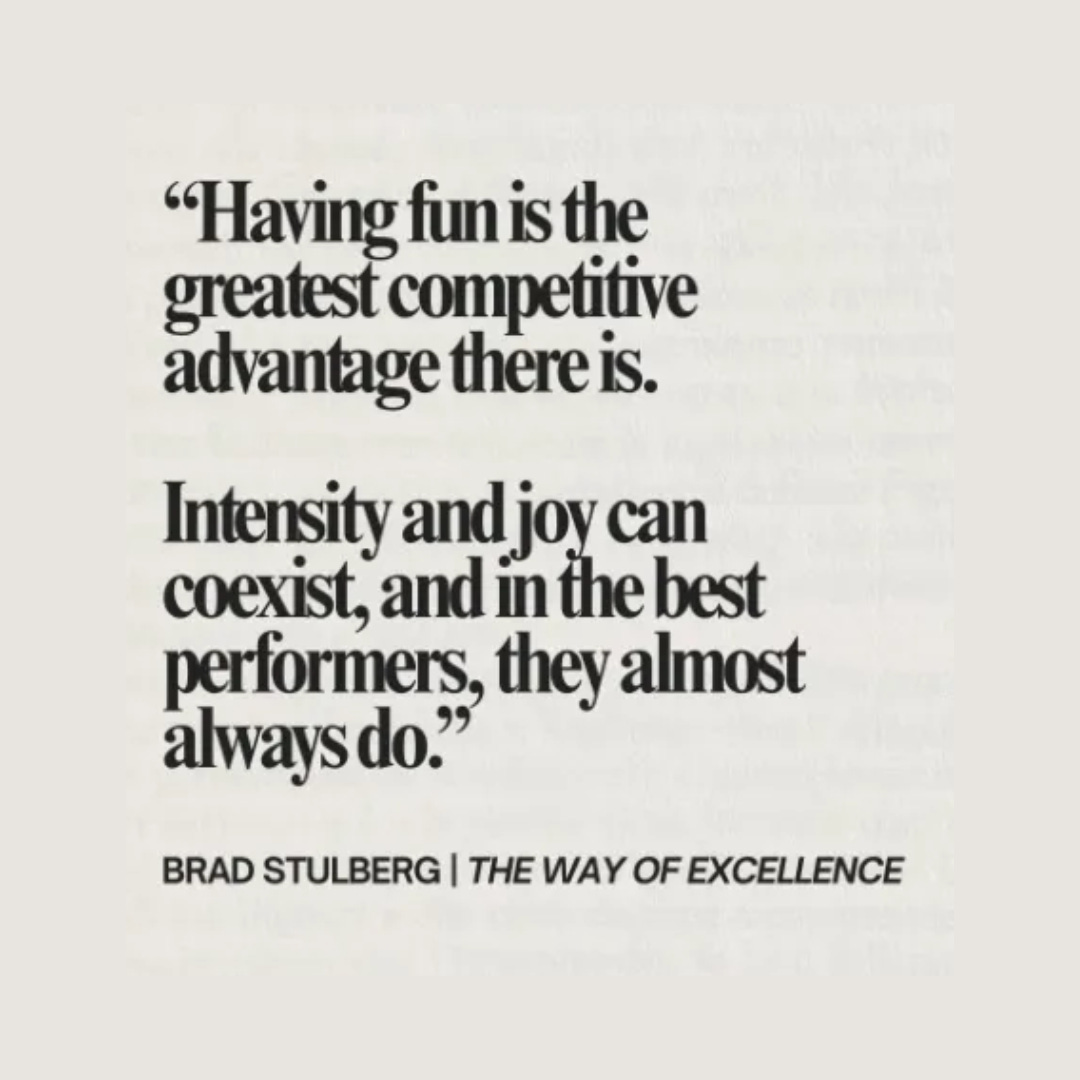
Are you having fun? (This reminder is just as much for me as for any of you!)
Enjoyed this? Subscribe to receive more like this in your inbox each Friday. Or follow to ensure you see my posts in the Substack app. You can also read my full Substack archive here.
Want to read more from me? Read my book, Do Sweat the Small Stuff, or follow me on Linkedin for more regular content.
Please use this button to share this post with someone who you think would enjoy it!
Get in touch by email if you’d like to explore me speaking to your organisation or at your event, or are interested in working with me as a coach.
Thanks for reading. See you next week!