
Pressure from without…or from within?
Noticing the weight you add, and learning to put some of it down

I’ve been thinking lately about how long it takes me to do things.
Not the genuinely complex, never-been-done-before pieces of work – more the sort of tasks that should be challenging in a good way, but not feel like wading through treacle.
I have a familiar story that goes something like: “I’m a bit inefficient. I faff. I overthink. I should be quicker.”
Over Christmas, with a bit time to reflect, I realised I’d forgotten something important: for any task that feels hard or heavy, there are two parts to the experience.
There is the task itself, which does take time and attention, especially for anything meaningful. And then there is the fear, worry and doubt that silently attach themselves to the task.
That second part – the emotional overhead – can easily take as much time and energy as the task itself, if not more.
We talk about “pressure at work” as if it’s a purely external thing. But two people can sit in the same meeting with the same targets and one feels mildly stretched while the other feels crushed. The difference is the pressure we put on ourselves. Let’s explore.
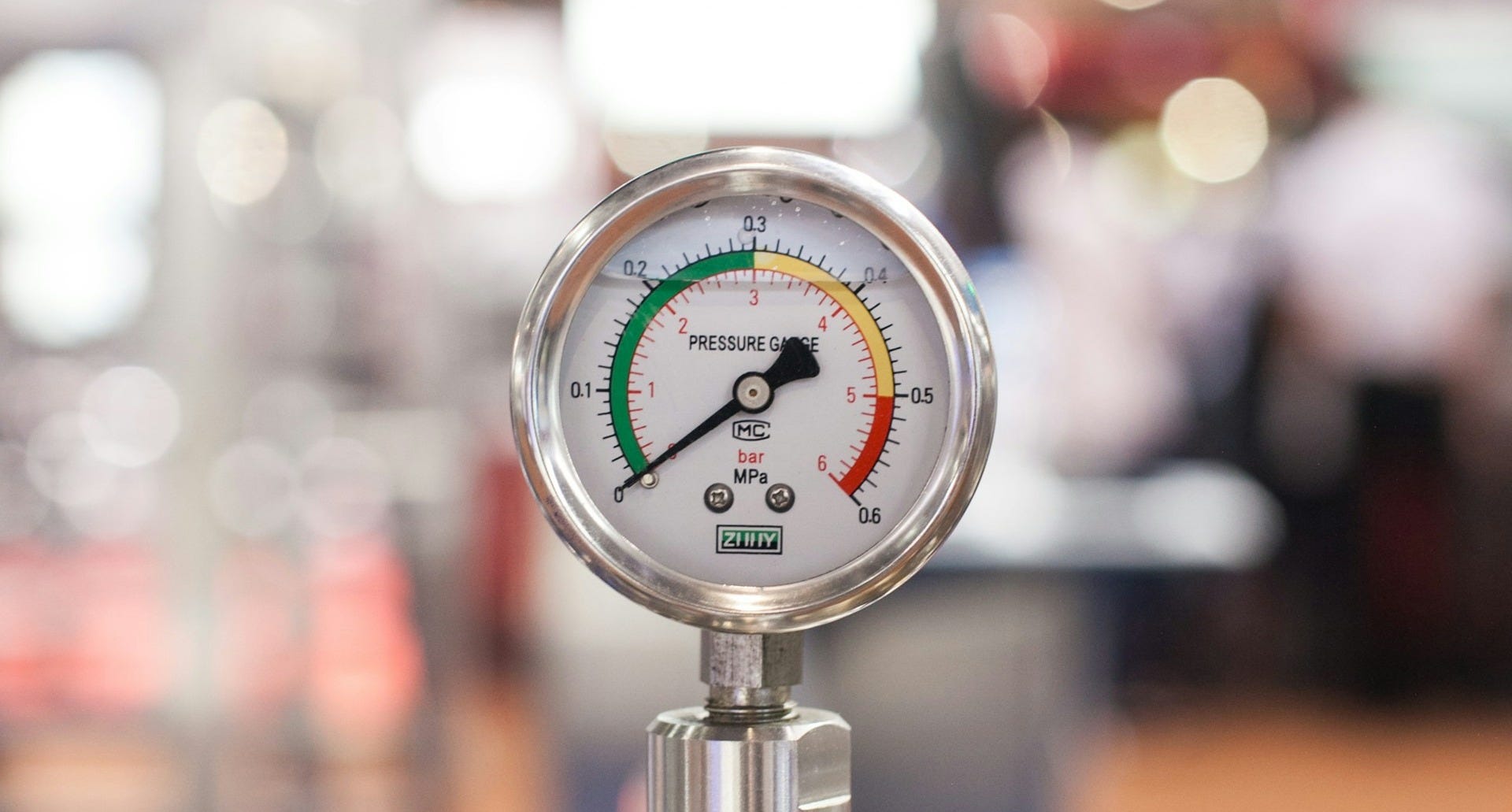
What do we really mean by “pressure”?
Pressure isn’t just one single thing, even if it is often talked about that way. One useful way to understand it is by distinguishing:
Load – what is actually on your plate. The number of projects, the size of the team, the complexity of the challenge, the volume of decisions.
Stress – your body’s physiological response to that load. The racing thoughts, shallow breathing, disrupted sleep.
Pressure – the meaning you add on top. The standards, stories and expectations that say what it will mean if you succeed or fail.
To a large extent, the external load – the set of responsibilities and constraints that come with the role – may be non-negotiable. It’s not quite that simple, but it’s also not the focus of this piece!
But the internal layer – the way we interpret that load, and the pressure we create around it – is often far more negotiable than it feels.
We can’t always change the facts. We can almost always change the story we’re telling ourselves about the facts. And that story has a huge impact on how much pressure we experience.
External pressure is real
Before we dive into the inner world, it’s worth being clear: external pressure is real, and I am not suggesting you’re imagining it.
Sources might include:
Organisational targets and growth expectations.
Cost pressures and “do more with less” messages.
Regulatory or legal deadlines that genuinely cannot move.
Customers or stakeholders with urgent needs.
Senior leaders with a low tolerance for delay or ambiguity.
It also shows up in more everyday ways:
The calendar that is back-to-back by default.
“Quick questions” that are never quick.
Colleagues who have a habit of dropping last-minute emergencies into your day.
Poorly prioritised projects where everything is “top priority”.
Sometimes the pressure is simply the consequence of other people’s disorganisation landing in your lap – and the reality of life and leadership means that sometimes you just have to deal with that.
External pressure can lead to very real experiences of time pressure, decision fatigue and cognitive (over)load. So I’m not trying to say this is all “mindset” and that you should be able to breathe your way out of a fundamentally unsustainable situation.
Instead it is an invitation to notice where the hidden, optional layer starts to creep in, so that we can start to do something about it.
Fear, worry and doubt
One simple way to look at the internal layer of pressure is through three lenses: fear, worry and doubt.
Fear
Fear is about threat – real or perceived. In a work context, it might sound like:
“If this goes wrong, there will be serious consequences.”
“If I push back, it will damage the relationship.”
Some fears may be grounded in reality. Others are amplified by past experiences, organisational culture, or the stories we tell ourselves about what is and isn’t allowed.
Fear can drive behaviours such as:
Over-preparing for every meeting, just in case you’re asked about something, even if it’s unlikely.
Re-writing your team’s work late at night because the idea of “missing something” feels intolerable.
Avoiding difficult conversations, then working twice as hard to compensate for what you’re not saying.
The task itself might only need two hours. The fear around it quietly adds another two – or more.
Worry
Worry is the mental rehearsal of what might go wrong and how you might be seen.
It sounds like:
“What if I drop this ball and it has a knock-on effect for everyone else?”
“What will they think if this is not up to my usual standard?”
“If I say no to this request, will I be seen as unhelpful or not committed?”
There is often a concern for others woven into worry: not wanting to let people down, wanting to be seen as supportive, wanting to keep the peace.
Worry can lead to:
Saying yes to additional work when you are already at capacity, because it feels easier than facing the discomfort of saying no.
Checking and re-checking things you’ve already done, just to be sure.
Carrying mental to-do lists around in your head, rehearsing conversations or scenarios on a loop.
Notice that none of these behaviours actually reduce the external load. They just make carrying it feel heavier.
Doubt
Doubt lives in the questions we ask about ourselves:
“Am I really capable of this?”
“Do I actually know what I’m doing?”
“What if I’m out of my depth and this is the moment everyone realises?”
Doubt is very common in transitions – new roles, bigger teams, higher stakes – but it can hang around long after you’ve demonstrated competence.
Doubt often leads to:
Over-reliance on others’ opinions because your own judgement doesn’t feel trustworthy.
Over-working as a way to prove (to yourself or others) that you deserve to be in the room.
Hesitating on decisions, slowing things down while you seek yet another piece of information or reassurance.
Again, the actual task might be well within your capability. The doubt about your capability adds pressure that makes it feel much harder than it is.
A note of self-compassion
Before we try and do anything about the fear, worry and doubt, it’s important to say: a lot of this is understandable.
Many leaders have been rewarded throughout their careers for going the extra mile, rescuing failing projects and being constantly available. Many organisations still run on myths like “we do our best work under pressure” or “if you can’t handle the heat, you’re not ready for this level”.
And for some of us, putting pressure on ourselves was – and maybe still is – a way of staying safe or in control. So there’s nothing “wrong” with you if you recognise yourself here. In some contexts, these patterns will have helped you.
The question now is whether the same patterns are still serving you – or whether they’re quietly undermining the quality of your thinking, your wellbeing and your leadership.
So what can we do differently?
There’s a lot that could be said here, but let’s keep it simple. Here are four practical shifts you can start experimenting with straight away.
One. Notice, name – and gently challenge – the pressure
Next time you feel that familiar tightening around a task, pause and ask: What is the actual load here? What am I afraid of? What am I worrying about? What am I doubting about myself?
Write it down, if you can. Seeing it in black and white helps separate the task from the story. Then add one more question:
Is this thought helping me do better work – or just making it feel harder?
You don’t need to argue with every thought. Just notice which ones are useful and which are simply habit.
Two. Watch your language
The way you describe things, even in your own head, can either dial the pressure up or down. Try these small shifts:
From “I have to…” to “I’m choosing to…” or “I’m being asked to…”
“I have to get this done tonight” becomes “I’m choosing to get this done tonight because…”
Soften the absolutes:
Notice words like “must”, “always”, “never”, “can’t possibly”.
Experiment with “I’d prefer”, “often”, “I’d find it uncomfortable, but…”.
This isn’t about pretending everything is optional. It’s about making your choices visible to yourself, rather than living under a blanket of unexamined “have tos”.
Three. Renegotiate instead of silently absorbing
A lot of internal pressure rests on untested assumptions such as: “This deadline is fixed.” “I can’t say no.” “If I ask to reprioritise, they’ll think I’m not up to it.”
Instead of taking those as facts, try one small renegotiation step:
Ask simple clarifying questions:
“What’s driving this timeline?”
“What happens if this lands Monday instead of Friday?”
Put the trade-offs on the table:
“If we keep this deadline, here’s what I won’t be able to do – are we comfortable with that?”
“I can do A by Friday or B by Friday, not both. Which matters more?”
Use micro-boundaries:
“I’ve got 20 minutes now and then I need to prep for tomorrow’s session.”
“I can look at this first thing and get back to you by 10.”
You won’t always get the answer you want. But even asking begins to rebalance responsibility, and it stops you automatically converting every request into unquestioned, non-negotiable pressure on yourself.
Four. Deliberately lower the bar (in the right places)
This is the one many high-achieving leaders resist, often because of a belief that “if I don’t put pressure on myself, I’ll let things slide.”
But not everything needs to be done to the same standard – yes, really. Try intentionally choosing where “good enough” is genuinely enough.
For example:
Send a solid, clear slide deck that is not perfectly polished – and notice what actually happens.
Don’t re-write your colleague or team member’s document; give feedback and send it as is.
Leave a non-critical email until tomorrow instead of clearing the deck at 11pm.
You can make this an explicit experiment:
“This week, I will deliberately lower the bar on one task that doesn’t need to be perfect – and I will pay attention to the outcome.”
You may discover that your “default pressure level” has been set much higher than reality requires.
The price of pressure
You may well believe that pressure is the price of doing important work. That without it, you’ll lose your edge.
I’d offer a different possibility:
You don’t do your best work despite feeling constant pressure.
You do your best work when your load is clear, your stress is manageable, and the pressure you put on yourself is proportionate and intentional, not automatic.
You can’t always choose the external pressure. But you can always influence how much extra you add on top. So this week, try asking yourself once a day:
“What pressure am I carrying right now that I don’t actually need to?”
And then take one small action – a conversation, a boundary, a slightly-less-than-perfect deliverable – to put down a tiny piece of it. Bit by bit, that’s how the work starts to feel lighter again, even when the load hasn’t changed.
Hit reply or leave a comment to let me know what you’ll be practising this week to relieve some pressure.
Restack
A short but on point restack this week on how pressure shows up in our decision-making.
Meme of the week
This just seemed apt, on many levels 😂

Want to read more from me? Read my book, Do Sweat the Small Stuff, or read my full Substack archive here. Follow me on Linkedin for more regular content.
Please use this button to share this with someone who you think would enjoy it!
Get in touch by email if you’d like to explore me speaking to your organisation or at your event, or are interested in working with me as a coach.
Thanks for reading. See you next week!